Indoor Air Quality in Commercial Buildings: Why Ionizers Are Becoming a Standard in Mid-Missouri
The air quality conversation in commercial buildings has shifted significantly over the last several years. What used to be a concern mostly for healthcare facilities and clean-room environments is now a front-of-mind issue for office building managers, school administrators, and retail property owners across Mid-Missouri. Employees notice. Tenants ask about it. And the data on productivity, absenteeism, and occupant health is hard to ignore. For commercial property owners and facility managers in the Fulton, Columbia, and Jefferson City area, investing in indoor air quality — specifically in ionization technology — is increasingly a competitive and operational priority.
The Problem With Standard HVAC Filtration Alone
Most commercial HVAC systems come with filtration as a baseline feature — typically MERV 8 to MERV 13 filters that capture particulates above a certain size. This is useful, but it has a fundamental limitation: standard filtration only captures what passes through the filter. Pathogens, volatile organic compounds (VOCs), odors, and fine particulates circulating in occupied spaces between filter passes aren't being addressed.
In a building with multiple occupants, open-plan workspaces, or high foot traffic — think a government office in Jefferson City, a retail center in Columbia, or a manufacturing facility in Callaway County — standard filtration alone isn't managing the air quality challenges that come with the occupant load.
How Commercial Ionization Works
Bipolar ionization systems (also called needlepoint bipolar ionization, or NPBI) generate positive and negative ions that are distributed through your existing ductwork into occupied spaces. These ions attach to airborne particles, causing them to cluster and become heavy enough to fall out of the breathing zone or be captured by filtration more effectively. They also interact with the cell surfaces of pathogens — bacteria, viruses, and mold spores — in ways that disrupt their ability to function and reproduce.
The key advantage of ionization over filtration upgrades alone is that it works in the space, not just at the air handler. It's a proactive technology that addresses air quality where occupants actually are, rather than waiting for contaminated air to cycle back through the mechanical system.
Applications in Mid-Missouri Commercial Buildings
The commercial buildings across Mid-Missouri that tend to benefit most from ionization systems share a few characteristics: high occupant density, variable seasonal ventilation (buildings that run more recirculated air in winter), older HVAC infrastructure that limits filter upgrade options, and operations where air quality directly affects product or process quality.
Manufacturing and industrial facilities with process odors or airborne particulates — a significant segment of the commercial market around Fulton and the US-54 corridor — see meaningful improvement in facility air quality that affects both occupant comfort and compliance considerations. Food-adjacent businesses benefit from odor and pathogen control. Office environments see improvements in occupant-reported comfort and reduced sick days.
Installation and Integration
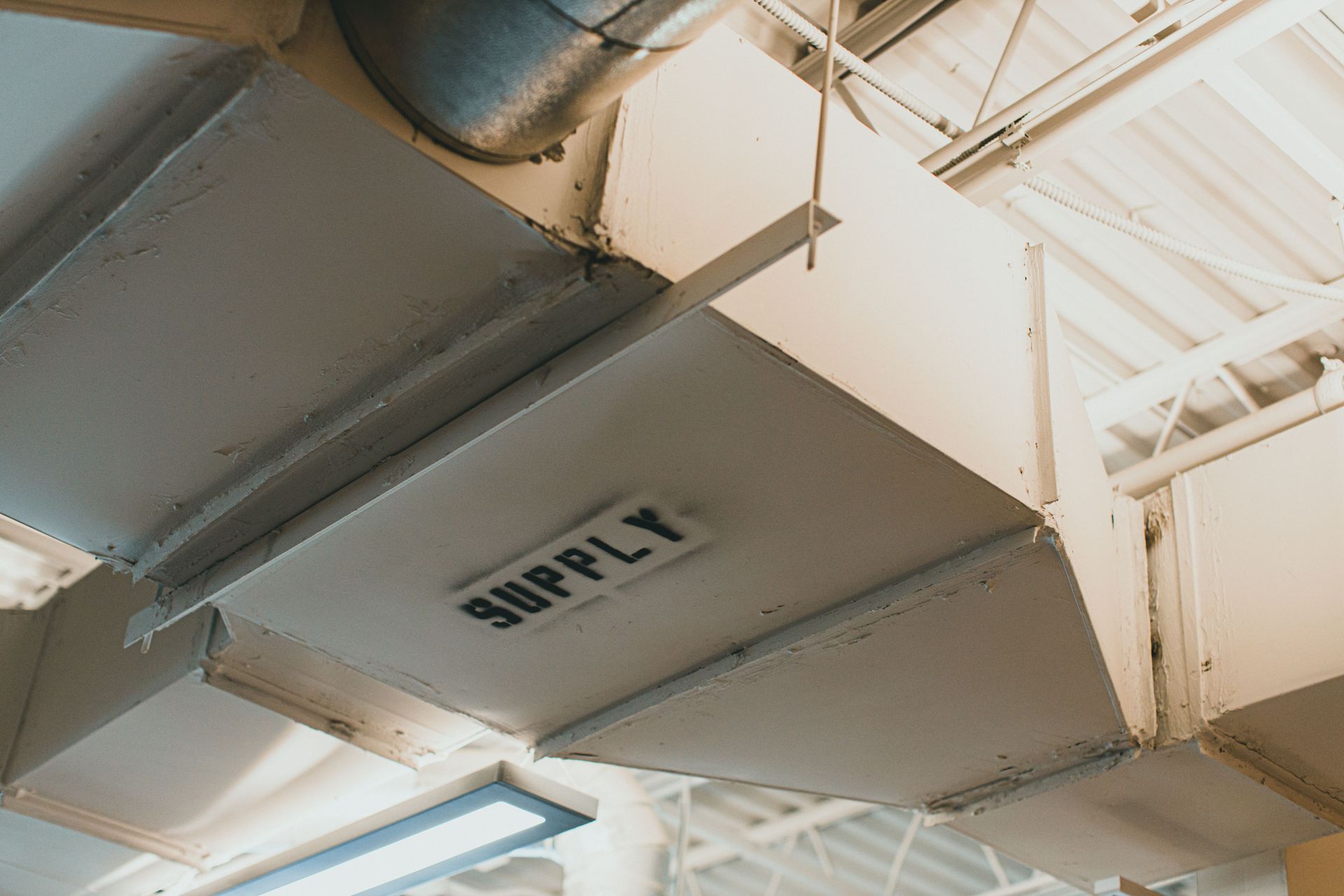
Commercial ionization systems integrate into existing air handling units and ductwork — they don't require a parallel air handling infrastructure. For most mid-size commercial buildings, installation is a relatively low-disruption project that TEEL Mechanical can complete during off-hours or over a weekend.
The technology has come down significantly in cost over the past five years, and energy consumption is minimal — most commercial-grade ionization systems draw less power than a light bulb. The ROI case is typically built on reduced absenteeism, extended filter life (ionization causes particles to cluster and be captured more efficiently), and the reduced liability exposure that comes with documented air quality management.
TEEL Mechanical can assess your commercial building's air quality and recommend the right ionization solution for your space and occupant load. We serve businesses throughout Mid-Missouri — Fulton, Columbia, Jefferson City, Moberly, and beyond.